A Chicago guide to sleep surfaces
Latex Toppers Explained: Choosing Loft, Feel, and Natural Materials
A latex topper can make a familiar mattress feel more inviting, adding a responsive layer of cushioning without replacing the support beneath it. The details matter: thickness, firmness, latex construction, and the condition of the mattress all influence whether the change feels subtly polished or dramatically different.
Published October 28, 2026
There is a particular appeal to the idea of a mattress refresh: the promise of better comfort without the logistics of replacing an entire bed. A topper offers that possibility. It sits between mattress and fitted sheet, changing the feel of the surface while leaving the mattress’s core support system in place. Latex is one of the most distinctive materials for this role. It cushions, responds quickly to movement, and tends to feel buoyant rather than deeply enveloping.
That difference is more than a matter of terminology. A latex layer can soften a firm sleep surface while preserving a sense of lift, whereas some conventional foams allow the body to settle in more slowly. But a topper is not a repair for every mattress problem. It cannot reliably correct sagging, broken support, or a worn-out core. The most satisfying choice begins with an honest assessment of the bed you already have, followed by a closer look at loft, firmness, and materials.
What a latex topper can—and cannot—change
A mattress has several jobs. Its support system helps keep the body level, while its upper comfort layers soften contact and help relieve pressure. A topper primarily adjusts that uppermost experience. It can make a firm mattress feel gentler, add a touch of contouring, or introduce a more resilient surface. It does not replace the mattress’s underlying structure.
Imagine the mattress as the architecture of a room and the topper as its finishing layer. The finishing can transform the way the space feels, but it cannot stabilize a foundation that has shifted. If the mattress dips visibly, feels uneven, or no longer supports you comfortably in different areas, adding a topper may temporarily disguise the issue without resolving it. The result can be a plush surface over an unstable base.
A topper is most promising when the mattress remains reasonably level and supportive but feels too firm, too flat, or simply less comfortable than you would like. It may also help refine a guest bed or make a sound mattress feel better suited to a particular sleeper. Before shopping, note where discomfort occurs and whether it is linked to pressure at the shoulders or hips, a surface that feels hard, or a mattress that sags beneath you. Those are different problems, and they call for different solutions.
Why latex feels different
Latex is known for its springy, responsive character. Press down and it tends to rebound readily, making it easier to change position than on a surface that conforms slowly. This quality can feel pleasantly buoyant: the body receives cushioning, but the sensation is not necessarily one of sinking deeply into the bed.
Latex toppers are available in different firmnesses and constructions, so no single description applies to every model. A softer layer may provide more give around pressure points, while a firmer one may feel more substantial and less yielding. The mattress beneath it remains part of the equation. A soft topper on a firm mattress will behave differently from the same topper placed over a mattress that already has generous cushioning.
Many shoppers also consider latex for its breathability and material profile. How cool a bed feels depends on the entire sleep system—not only the topper—including sheets, mattress construction, room temperature, and personal preference. Natural latex is often selected by people seeking a material derived from natural rubber, but “natural” is not a substitute for checking the complete product specification. Covers, quilting, adhesives, and other components can vary.
Thickness, or how much change you want
Thickness is one of the most visible specifications, but it does not tell the whole story. A thicker latex topper generally introduces a more pronounced change in the bed’s surface feel. A thinner layer may offer a subtler adjustment, allowing more of the existing mattress character to come through. Firmness and the mattress underneath can make two toppers of similar height feel quite different.
Think of loft as the scale of the edit. If your mattress is comfortable but slightly too firm, a modest layer may be enough to soften first contact. If you want a more noticeable cushion and pressure-relieving feel, a thicker design may be worth considering. Still, the goal is not to select the tallest option by default. Excess loft can make the bed feel less stable or change how easily you move across the surface, depending on the latex and the foundation below.
Remember that a topper adds height to the bed. Check the depth of your fitted sheets, the clearance around the frame, and the height of bedside furniture. In Chicago apartments, where bedrooms can be compact and furniture often needs to serve several purposes, a few additional inches may affect more than the look of the bed. Consider whether you will still be able to sit down comfortably, tuck sheets in securely, and move around the room without disrupting the layout.
Firmness and the feel of the sleep surface
Firmness is a personal impression, not a universal measurement. Body weight, sleeping position, mattress construction, and preference all shape how a layer feels. One sleeper may describe a topper as gently cushioned; another may find the same material too soft or too firm. Product labels are useful for comparing options within a range, but they cannot perfectly predict the sensation in your own bedroom.
Side sleepers often look for enough surface give to cushion the shoulders and hips, while maintaining a comfortable sense of alignment. Back sleepers may prefer a balanced feel that cushions without allowing the midsection to settle excessively. Stomach sleepers commonly seek a comparatively firmer, more level surface. These are starting points rather than rules; individual comfort and a mattress’s existing feel matter just as much.
For couples, the question becomes more layered. Different body types and sleeping styles can make one shared surface feel unlike the same surface experienced by each person. A topper can soften the bed for both sleepers, but it may not resolve a substantial difference in comfort needs. If you share a mattress, discuss what each person hopes to change before choosing a firmness. A topper should improve the shared bed, not simply make one side feel better at the expense of the other.
Natural latex and construction details
When comparing natural latex toppers, look beyond a headline such as “all-natural” or “organic.” Read the product details to understand what the latex is, how the comfort layer is made, and what materials surround it. Some designs pair latex with a quilted cover or other natural fibers, creating a finished piece that includes more than the latex insert alone.
Dunlop and Talalay are two common latex processes. They can produce different characteristics in feel and construction, though the name of the process alone does not determine whether a topper will suit you. The final experience depends on the specific product’s firmness, thickness, cover, and how it works with your mattress. If you are comparing models, use manufacturer specifications to confirm the construction rather than relying on general assumptions.
Certifications can help clarify particular claims, but they should be read carefully. A certification may apply to a defined material or production standard; it does not automatically establish that every component in a finished product has the same certification. Check what the certification covers, which organization issued it, and whether the product documentation identifies the relevant component. A careful materials list is more useful than a vague promise.
For a Chicago household, the surrounding environment is also worth considering. Winter heating, summer humidity, older buildings, and differences in bedroom ventilation can all influence how a bed feels from season to season. No topper can regulate an entire room, but breathable bedding and thoughtful layering can help create a more comfortable sleep setting. If temperature is a major concern, consider the topper together with your sheets, blankets, and room conditions rather than expecting one material to do everything.
A natural latex example: the Harmony topper
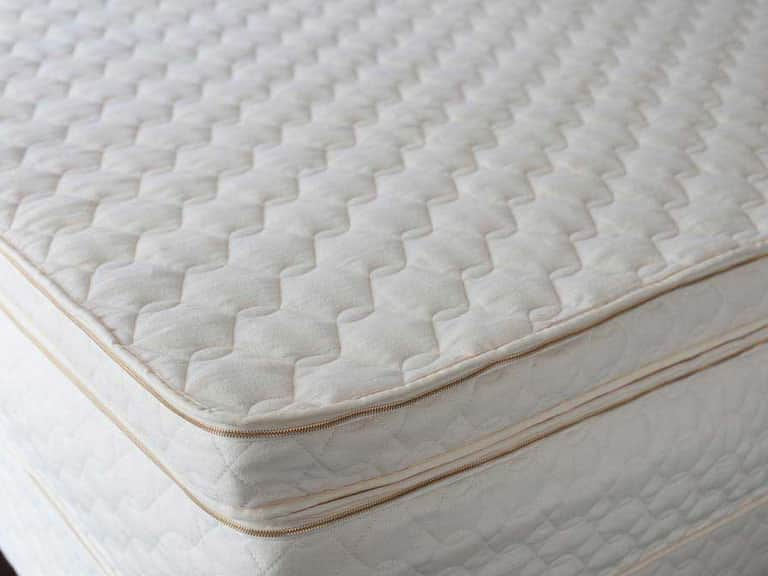
One example of a layered natural-latex design is the Savvy Rest Harmony Latex Topper. Its product specifications describe a three-inch layer of soft Talalay latex, bringing the finished topper to approximately four inches when combined with its quilted organic-cotton cover and wool batting. The listed construction is designed to add cushioning and pressure-point relief, and the product is offered in standard mattress sizes.
That construction illustrates why it is useful to distinguish the latex insert from the total height of the finished piece. A shopper comparing “three-inch” and “four-inch” options should confirm whether the stated measurement refers to the latex alone or the complete topper. The Harmony’s wool-and-cotton cover is also part of its feel and care profile, not merely decorative finishing.
The topper is described as combining with the Savvy Rest Serenity mattress to create the Unity Pillowtop configuration. That pairing is one example of how a separate comfort layer can be used as part of a larger sleep system. It is not necessary to buy a matching mattress to understand the topper’s purpose, but compatibility, mattress dimensions, and the condition of the existing bed remain essential considerations. Review the current product information for warranty terms and care instructions before purchase, since coverage can vary depending on how the topper is used.
Fit, movement, and everyday practicality
Measure the mattress before ordering, including its length, width, and depth. Confirm that the topper’s dimensions match the mattress size and that its cover or securing method will keep it properly positioned. A topper that shifts during the night can become an irritant, particularly if the bed is shared or the sleeper changes position frequently.
Think about how the new surface will interact with your fitted sheet. A deeper mattress combined with a topper may exceed the pocket depth of existing sheets. If the sheet is stretched too tightly, it may pull at the corners or fail to stay in place. Measure the full height of the mattress and topper together, then compare that figure with the sheet manufacturer’s stated pocket depth.
Movement is another practical question. Latex tends to respond quickly to pressure, which some sleepers appreciate when turning over or getting out of bed. Yet toppers vary in density, firmness, and construction, and the mattress beneath them still affects the overall feel. If you are particularly sensitive to motion from a partner, consider the complete mattress system rather than assuming the topper alone will determine how much movement you notice.
Care and longevity
Care instructions depend on the exact product. A removable cover may be treated differently from a latex insert, and many latex layers are not intended for routine machine washing. Follow the manufacturer’s directions for cleaning, airing, and protecting the topper. Using a well-fitting mattress protector can help guard against spills and everyday wear, provided it does not compromise the feel you are trying to achieve.
Allow the topper to settle according to the product’s instructions after unpacking. Keep it on a stable, compatible mattress surface, and avoid folding or storing it in a way the manufacturer does not recommend. If the topper develops an unusual odor, persistent shape changes, tears, or other damage, consult the care guidance rather than applying household cleaners or heat without checking suitability.
Longevity is influenced by material quality, use, maintenance, and the support beneath the topper. A resilient material may retain its character well, but no layer is immune to wear. Most importantly, a topper’s lifespan does not extend the structural life of a mattress that has begun to sag. Reassess both pieces over time: the comfort layer and the foundation underneath it.
A measured way to choose
Before comparing products, describe the change you want in one sentence: “I want a softer surface at my shoulders,” for example, or “I want a little more cushioning without a deep, slow-sinking feel.” This simple exercise keeps the search focused. Then examine the mattress itself. If it is flat and supportive, a topper may be a reasonable way to refine comfort. If it is uneven or worn through, replacement may be the more sensible path.
- Check the mattress first. Look for visible dips, uneven support, or persistent discomfort that a surface layer is unlikely to correct.
- Choose the desired degree of change. A thinner topper may provide a subtler adjustment; a thicker one may create a more noticeable shift in cushioning and bed height.
- Match firmness to your sleep preferences. Consider position, pressure points, and whether you share the bed.
- Read the complete materials description. Confirm latex type, cover materials, certifications, and what those certifications actually apply to.
- Measure the finished setup. Check mattress dimensions, sheet-pocket depth, frame clearance, and the practical height of the bed.
- Review care and warranty details. Confirm cleaning instructions and any conditions that depend on the mattress or base used underneath.
Frequently asked questions
Will a latex topper make a firm mattress softer?
It can soften the surface feel, particularly when the topper is softer than the mattress beneath it. The amount of change depends on thickness, firmness, construction, and the mattress itself. A topper is less likely to help if the mattress’s underlying support has deteriorated.
Is a thicker latex topper always more comfortable?
No. Greater thickness can create a more noticeable cushion, but comfort depends on the sleeper and the complete bed. A thicker topper also raises the mattress and may change the feeling of stability, movement, and sheet fit. Choose thickness according to the adjustment you need rather than treating extra loft as an automatic upgrade.
Does natural latex mean every part is natural?
Not necessarily. A finished topper may include a latex layer, a cover, quilting, and other components. Read the full materials information and verify any certification claim against the documentation for that specific product.
Can a topper fix a sagging mattress?
A topper may make the surface feel different, but it cannot restore a mattress that has lost structural support. If the bed dips or feels uneven, consider whether the mattress needs replacement before investing in another comfort layer.
The finishing touch, chosen with intention
A latex topper is best understood as a precise comfort adjustment—not a shortcut around mattress support. Its character emerges from the interplay of loft, firmness, latex construction, cover materials, and the bed beneath it. For some sleepers, the appeal is the responsive lift; for others, it is the opportunity to add cushioning while keeping a sense of ease and movement.
Take measurements, inspect the mattress honestly, and define what “more comfortable” means in your own terms. In a Chicago bedroom, where space, changing seasons, and practical routines all shape the sleep environment, the right topper should feel considered rather than excessive. The best choice is not necessarily the thickest or the most elaborately described. It is the one that makes a sound mattress feel more like your own.